Rediscovering a lost treasure
Seven Abilities that Predict Longevity, Part 2 and 3 of 7
I restarted doing the Asian Squat on 1 October. I have hardly intentionally done it over the years except when a squatting toilet is the only choice I have 🤭. The video recording of me doing the squat was taken on Day #40 of my Mobility Movement journey. I should have done a “before” video on day #1. There are two variants to the squat I try to do:
- maintain a squat for a minute and slowly increase it to 20 minutes and more as I get stronger
- squat-to-stand as many times as I am able
I will do more “after” videos as I go along to help me track my progress.
A Lost Treasure
Our family helper is from a neighbouring Asian country. When Mum and I are at the dining table talking, she joins in the conversation – always squatting on the floor when she talks to us. When she first came, I didn’t feel comfortable with this because I wanted to relate and talk to her at eye level. Eventually I gave up trying to ask her to sit at the table with us.
Although I grew up sitting on chairs, I was also comfortable sitting or squatting on the floor. I did it less and less as I grew up. I wonder if my discomfort with squatting is also cultural. We were taught to be prim and proper. You don’t squat in a snug fitting and delicate Peranakan kebaya! It doesn’t look refined.
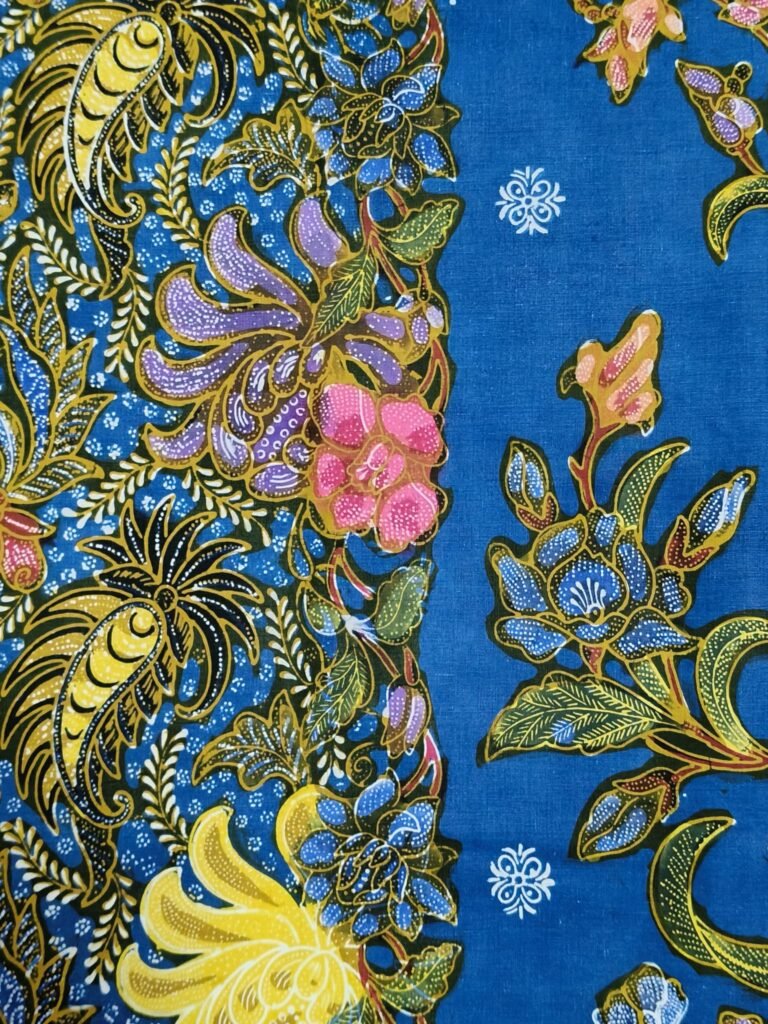
(Click this link to learn the intricacies of a kebaya. I’m not posting it here to respect the copyrights of the artist.)
Rediscovering a Lost Art
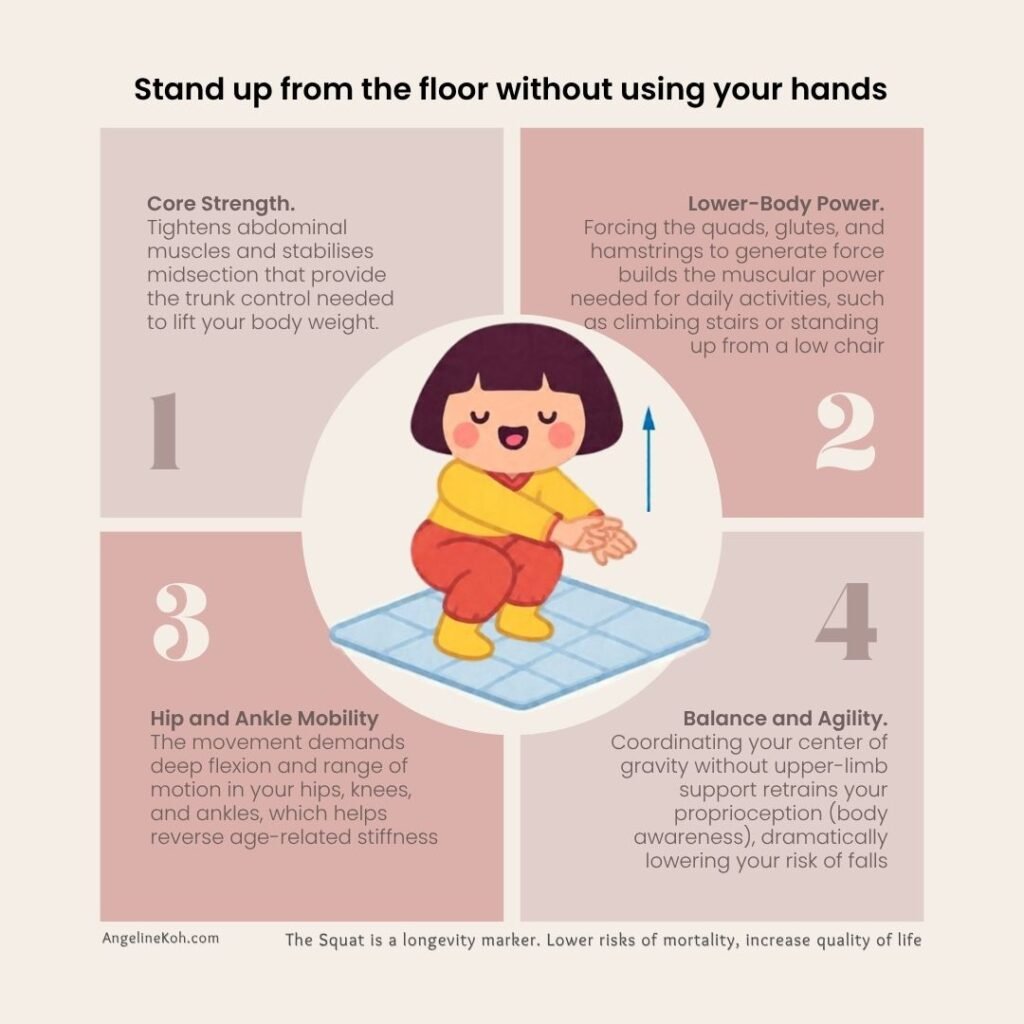
It was only after I started discovering the health benefits of squatting and trying to squat as a lifestyle that I began to wish I am as nimble as she is squatting. I want to squat and stand up without any aids with ease. I want to walk like a duck! I want to be able to crawl on the floor like a child. All these are what our bodies are made to do even to our old age, unless we are unfortunate to have had an injury – agility and strength help prevent fall injuries.
🧐 #Tip 2 and #3 of 7 Can you do the Asian squat?
And why you should care.
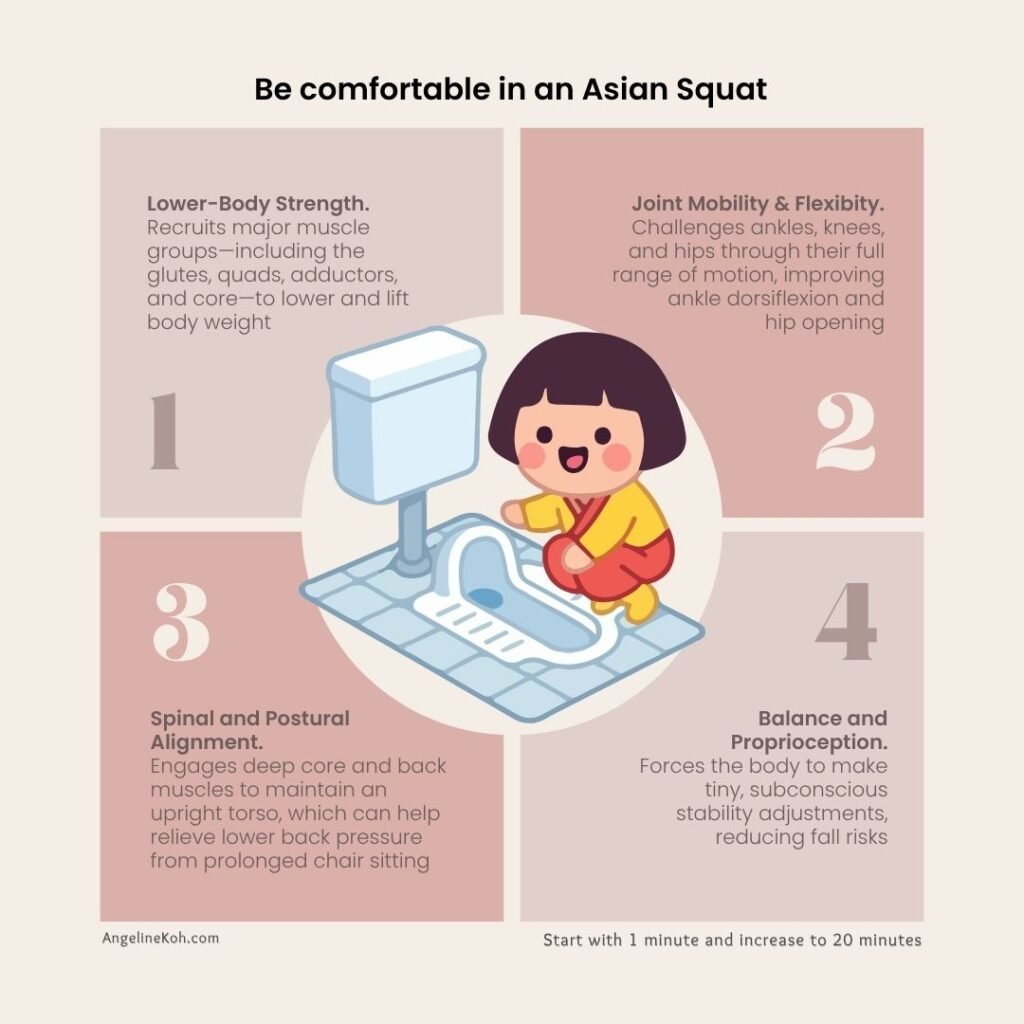
Squatting challenges the glutes, quads, abductors, and core. It engages the ankles, knees, and hips to their full range of motion. The body is forced to make tiny, subconscious stability adjustments that reduces fall risks.
Click here to to learn a movement you can try 😂
I was so excited rediscovering the Asian squat that I overdid it and injured my knees. I am learning to pace myself.
It was Coach Vanja who got me very interested in the squat. I signed up for her do-it-at-your-own pace online training. I want to build capacity to get to where she is challenging me to be (with some discounts 😂). It’s taken me about 40 days to get to where I am now (in the video).
Coach John Noel shows you baby steps to get into the squat. Go on and give it a shot.
I can squat 😅. Can you?
Shoot for the moon. Even if you miss, you’ll land among the stars.
– Oscar Wilde
Disclaimer: This is NOT medical advice! You are responsible to do your own research.
3 comments
Irene Tan
Well done Angel 👍💪💪. I don’t think at my age I can try this. What with both knees meniscus torn previously ☹️
Angeline Koh
Thanks, Irene. Listen to your body. If you cannot do “A”, you can try “B”. I think the point is to keep moving, and at our own pace. I know what you are trying. You are off on a good start. Well done to you too.
Angeline Koh
Thanks, Irene. Listen to your body. If you cannot do “A”, you can try “B”. I think the point is to keep moving, and at our own pace. I know what you are trying. You are off to a good start. Well done to you too.